Kamau Ng’ang’a
10 september t/m 3 januari 2027


Stephan Blumenschein’s exhibition ‘Walking and closing one’s eyes.’ was officially opened on 10 October by writer and editor Janine Armin. You can read her opening word below.
In 'Walking and closing one’s eyes.' Stephan Blumenshchein has made a birdcage, prints, a film, a listening station, all within a spatial environment tuned to observations from his research at the Museum Dr. Guislain in Ghent – Belgium’s first mental health institution. Care is central to Stephan’s practice. It incorporates physical gestures and listening. For those of us working in the arts “care” in scare quotes has become familiar: how an institution cares for its workers, how artists practice care towards themselves and their collaborators. As precarious workers, however, the term can feel emptied out. Support structures in the arts can make a big show of offering fair pay, but the institutions themselves are also mired by funding cuts. As such, care also has to mean asking who cares for the carer.
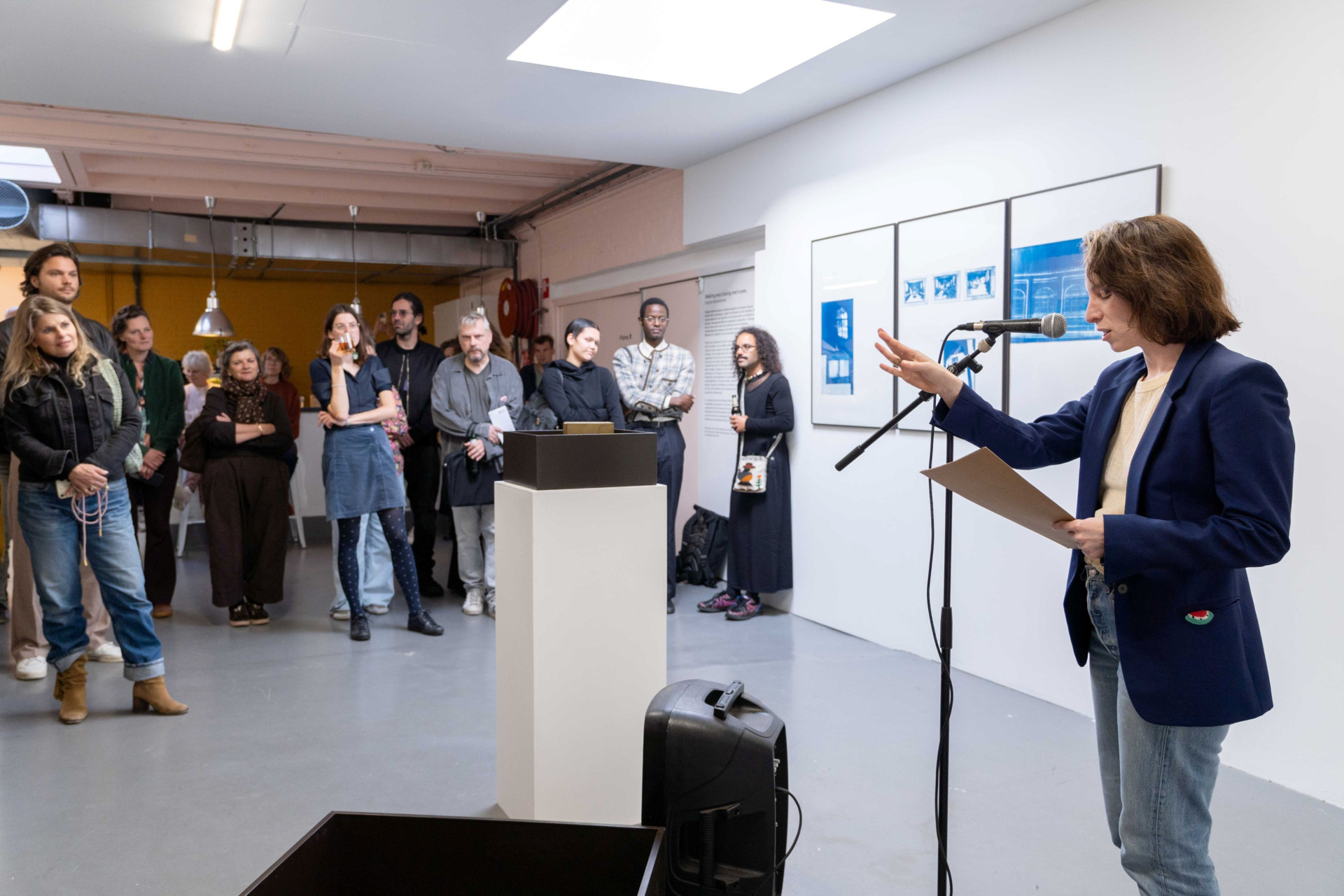
I was thinking about this care tangle in preparing for these few minutes about Stephan. I have known his practice for close to a decade, and we met through our shared friend Mirko Lazović, who helped install the exhibition, at his studio in Amsterdam. In that first meeting we enjoyed a meal and talked about the little ice age wood whose density is part of what makes the Stradivarius violin the best in the world. Stephan has a music background, and I would become involved in his projects about space, always with some musical counterpart. For me, too, music kept the fun or social aspect alive within these more conceptual terrains of art. Even when care was nowhere to be found, there was music, something to sing along to.
With his emphasis on care, it didn’t feel surprising when Stephan’s interest in space led him to research mental health – the main site of institutional care in the West. In around 2020, he began researching a nurse who had been involved in diagnosing not panic, but the panic of panic – where the rooms and hallway in which she would have moved were part of the observational framework, and which Stephan incarnated in a later exhibition allowing the viewer into the physical experience of diagnosis. More recently, he has found himself working within these institutions, opening up vocabularies of art and music with patients, and assisting in stewarding Galerijk, a collection of artworks made by those in treatment.
Much of this listening practice stems from sessions Stephan also began around 2020, where people bring a record important to them and then discuss. The ones I have attended stand out to me: I remember the room, the light, the temperature, who was sweating, facial expressions. Just yesterday I ran into someone who had shared a P.J. Harvey record several years ago. They mentioned that the series had become a touchstone for their own teaching: something to calm down a group of students at the end of a long day.
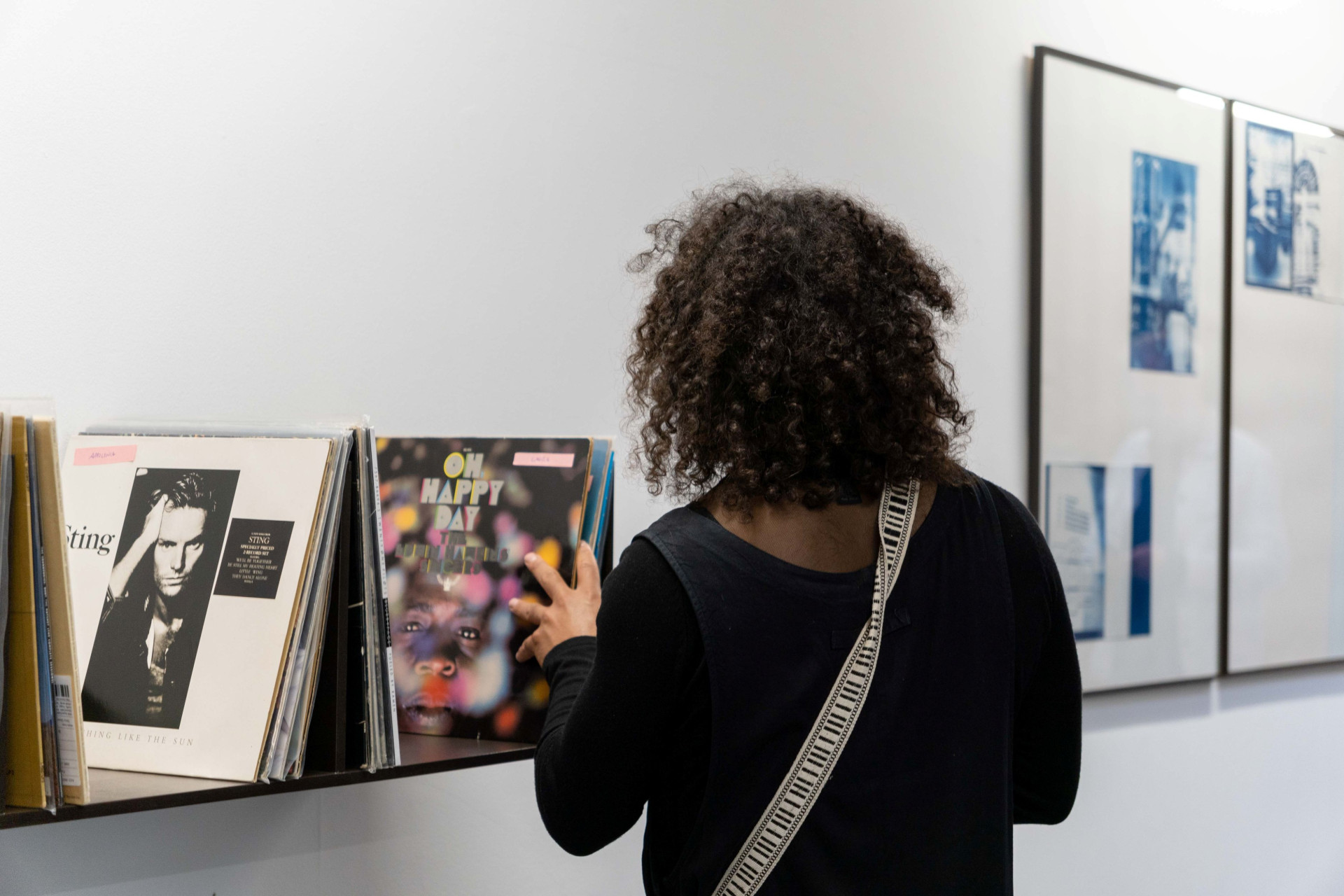
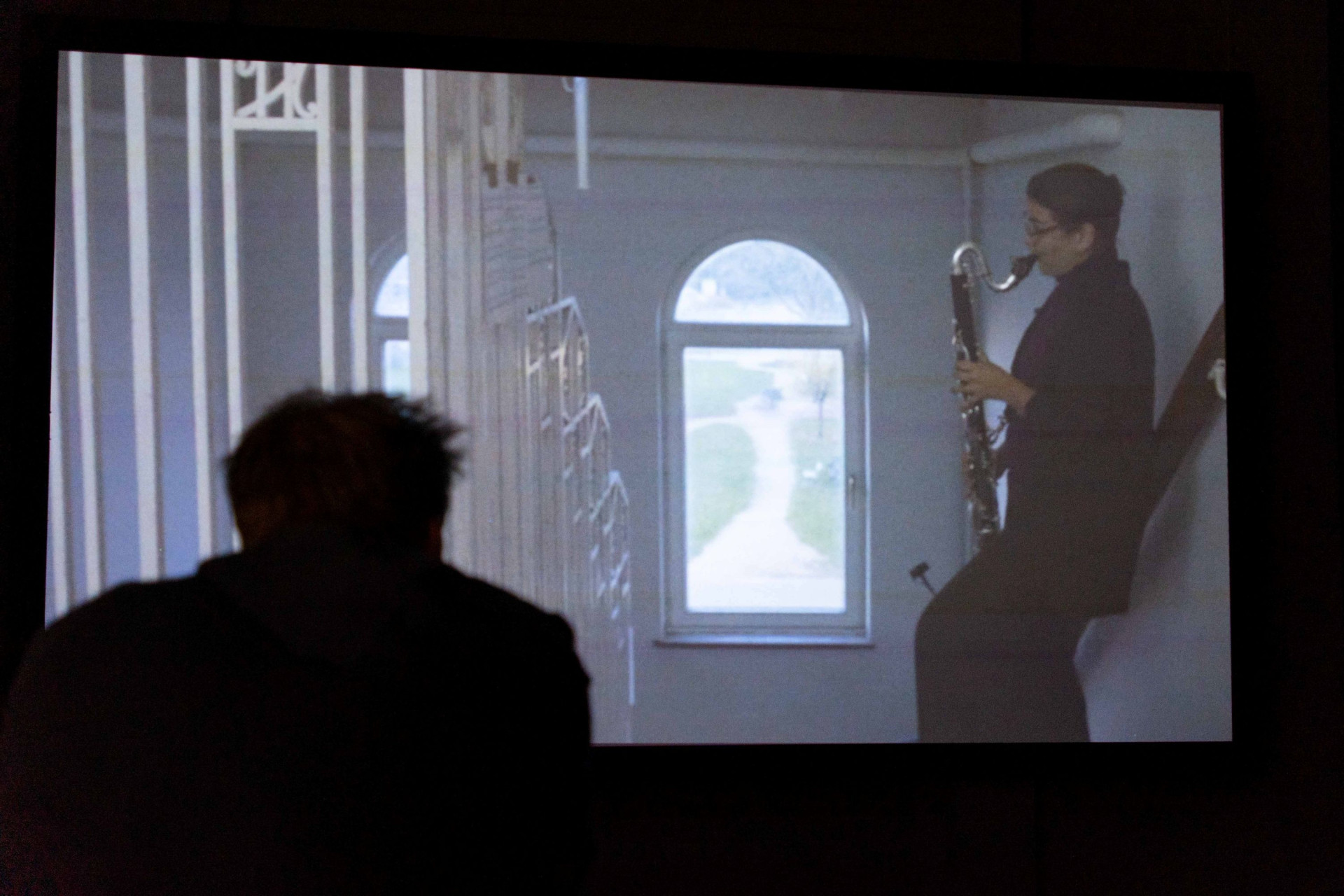
Sometimes that’s what we need in art, something to calm us down, to make the space around us softer, to learn how others soothe. Yet music here not only calms, but it also points to the potential for a melody – or a soothing object or idea – to be an opiate that prevents us from action. Stephan pulls out objects from the archives into the exhibition space such that their agendas become more tangible: a birdcage in which trainable canaries would have sung melodies to pacify patients, photos that seem to document harsh psychological lessons, beautifully barred windows, a music box without a dancer, a psychotherapist who refused to practice shock therapy. In his film Walking and closing one’s eyes – music for an archive, musicians play in a cramped archive; the sound becomes expansive when they leave it. Each tone reflects the implausibility of the collection: medical devices and culturally specific items whose histories have been seemingly recklessly jumbled together. Set in Belgium, there is the feeling of colonial loot – figurines stored in plastic storage boxes, a collection from a photojournalist and hospitals, outsider art. The artist notes that the work is about ‘how to be in such an archive, relating to the objects and their history. And how music can connect one to one’s body and move from there.’ It also hints at the practical means and specificity of institutional care. The music that allows for the pause needed to figure out why this might have happened and how to do better, could also mean asking the difficult if still speculative questions: does this archive have means to care for its own collections?
As part of the research process, Stephan said he first tried to get sounds out of the electro compulsive therapy machines, but then wondered why. He needed rather a way to deal with the sweat and hormones, evinced by those machines. The music box came in as that element, something he could hold to calm himself, even if it had lost its dancing figure, and infiltrate the institution itself by carrying it around.
How we are played by a system is something this exhibition considers; what sates us might also make us forget we can do better. As Stephan proposes, music offers examples of dysregulated processes that we needn’t fear, like the way a cat who helps out Stephan in his work at a mental health center flops down on artworks in process, or in listening to a disruptive rhythm. As Stephan said last week during install: ‘Music is a space where I feel safe.’ In this work I find there is comfort for both the carer, and the caged bird, who, because it is bound, as Maya Angelou has written, ‘opens its throat to sing’.
Janine Armin
d.d. 10 oktober 2026
Janine Armin (she/her) is a writer, editor, and organiser whose research explores artistic practices rooted in anticolonial, nonlinear methodologies and attuned to the instability of language. She is currently a PhD candidate in Art History at the University of Amsterdam and holds an MA from the Center for Curatorial Studies, Bard College.
De tentoonstelling 'Walking and closing one’s eyes.' is nog te zien tot en met 3 januari 2027 >>
Volg ons op social media